

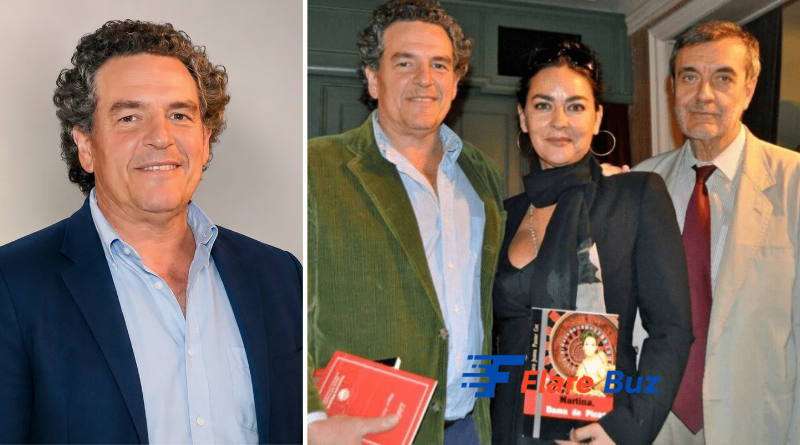
Carlos Scola Pliego is a name that has attracted public curiosity largely because of his former marriage to internationally recognized singer Sade Adu. However, there is considerably more to his story than his connection with the celebrated musician. Scola Pliego worked for many years in the film industry, taking on a range of responsibilities that included assistant directing, directing, writing, producing, and dialogue coaching. His career demonstrates a long-standing relationship with filmmaking, particularly documentary production.
Despite this professional background, relatively little reliable information is available about his private life. Unlike many people connected to internationally famous entertainers, Scola Pliego has generally maintained a low public profile. As a result, online discussions about him sometimes mix documented information with assumptions or unsupported claims. A more reliable account should therefore focus on information that can be traced to professional records and established sources.
His film career began well before his relationship with Sade Adu became a matter of public interest. Over the years, he worked on Spanish productions, international movies, television projects, and documentaries. His credits include work connected with major productions such as Never Say Never Again and Curse of the Pink Panther, while his own documentary projects explored subjects and locations in Africa. These achievements provide a useful way to understand Carlos Scola Pliego as a filmmaker rather than simply as a celebrity spouse.
Who Is Carlos Scola Pliego?
Carlos Scola Pliego is a Spanish film professional whose career has included several different roles within the entertainment industry. Professional film records identify Carlos Scola as the same individual associated with the name Carlos Scola Pliego, with credits covering assistant directing, directing, writing, producing, and other production responsibilities.
His early career appears to have been built through practical experience rather than public recognition. He worked behind the camera, where the responsibilities of production require organization, communication, attention to detail, and an understanding of how different departments work together. This type of experience can provide a strong foundation for anyone who later wants to become a director or producer.
Over time, Scola Pliego moved into more creative positions. His documented work as a director and writer on documentary projects shows that he eventually developed opportunities to tell stories through his own creative perspective. His career is therefore best viewed as a progression through different areas of filmmaking rather than as a single occupation.
Carlos Scola Pliego’s Early Career in Filmmaking
The earliest known film credits associated with Carlos Scola date back to the late 1970s. He was credited for script-related work on Spanish productions, including La boda del señor cura in 1979 and Opera Prima in 1980. These early assignments placed him close to the practical side of filmmaking and gave him experience with the detailed coordination required during production.
Script and continuity work can be particularly demanding because a film must maintain consistency even when scenes are shot out of chronological order. Small details involving costumes, props, dialogue, character movements, and positioning can affect whether separate shots fit together convincingly. Working in this environment requires concentration and a strong understanding of production procedures.
After gaining experience in these areas, Scola moved toward assistant-director positions. This was an important step because assistant directors are closely involved with the organization and execution of a production. They can help coordinate schedules, communicate with departments, manage practical arrangements, and support the director in keeping the production moving according to plan.
His Work on International Film Productions
Carlos Scola’s career became particularly interesting during the 1980s because of his involvement in international productions. His credits include work as a second assistant director on Never Say Never Again, the 1983 James Bond film starring Sean Connery. His work was connected with the Spanish production side of the film.
Working on an internationally recognized production of this scale would have provided valuable practical experience. Large productions require extensive coordination between cast members, technical departments, local crews, production offices, and filming locations. For someone developing a career in film, such an environment can offer an opportunity to understand professional production at a much larger level.
Scola was also associated with Curse of the Pink Panther, another international production with filming connections to Spain. His involvement in these projects illustrates the breadth of his work during this period. Rather than being limited to small independent productions, he was gaining experience on films that involved well-known international talent and substantial production operations.
His credits from the early 1980s also include other productions such as Hundra and G’olé!. Taken together, these projects show that his career was developing steadily within the production side of the film industry.
His Work on Christopher Columbus
Another notable entry in Carlos Scola’s professional history is the 1985 television miniseries Christopher Columbus. Production credits identify him as an assistant director for Spain on several episodes, using the name Carlos Scola Pliego.
Historical productions can be particularly complicated because they often require extensive coordination involving costumes, locations, large groups of performers, props, and period settings. Working on such a production would have required careful organization and cooperation among multiple departments.
The credit is also useful from a biographical perspective because it provides evidence that Carlos Scola and Carlos Scola Pliego refer to the same professional figure in film records. This is important because different databases and productions do not always use identical versions of a person’s name.
The Transition From Assistant Director to Documentary Filmmaker
One of the most important developments in Scola Pliego’s career was his move toward documentary filmmaking. After spending years working in production roles, he began taking on responsibilities that placed him more directly in control of the creative process.
In 1988, he was associated with Ngira: Gorilas en la montaña, a documentary short focused on gorillas and filmed in the Democratic Republic of Congo. Scola is credited with directing and writing the project, with production records also connecting him to its production.
This project represents a meaningful change in his career. As an assistant director, his primary responsibility was to help other filmmakers execute a production. As a documentary director and writer, he was responsible for developing and communicating his own creative vision.
Documentary filmmaking also presents challenges that differ from conventional scripted cinema. Real locations, animals, people, and environmental conditions cannot always be controlled in the same way as a studio production. A filmmaker must often respond to circumstances as they develop and find ways to tell a coherent story from real events and observations.
Donde Termina el Corazón
In 1989, Carlos Scola directed and wrote Donde termina el corazón, a longer documentary that explored different parts of Africa. The project included filming in areas such as the Ituri Forest and around Nairobi, giving the documentary a broad geographical scope.
The film is significant because it demonstrates that Scola’s interest in documentary filmmaking was not limited to a single short project. He moved from a documentary short into a substantially longer production, taking on greater creative responsibility.
The subject matter also distinguishes this part of his career from the commercial productions on which he had previously worked. His documentary projects were connected with natural environments, African communities, and journeys through different locations. This suggests a professional interest in real-world storytelling that existed alongside his work in conventional film production.
Academic research concerning Spanish documentary cinema has also discussed Donde termina el corazón within the context of documentary filmmaking from the period. This provides additional context for understanding the project as part of Scola’s creative career rather than simply as an obscure film credit.
Carlos Scola Pliego and Sade Adu
The part of Carlos Scola Pliego’s biography that attracts the most public attention is his relationship with Sade Adu. The singer, known professionally as Sade, became internationally successful through her music career and remains one of the most recognizable artists associated with sophisticated soul, jazz, and pop.
Scola and Sade were married in February 1989, according to professional biographical records, and their marriage ended in 1995. Their relationship occurred while Sade was already an established international recording artist.
The marriage naturally brought additional attention to Scola because of Sade’s public profile. However, the two worked in different areas of the creative industry. Sade was known primarily for music and performance, while Scola’s professional identity was centered on film production and filmmaking.
Reliable information about the private details of their relationship is relatively limited. While many online articles make claims about their personal life, not all of those claims can be independently verified. For that reason, it is more appropriate to focus on the basic documented facts of their marriage rather than presenting speculation as established history.
What Happened After His Marriage to Sade?
The end of Carlos Scola Pliego’s marriage to Sade Adu in 1995 did not mark the end of his professional connection with filmmaking. Later credits show that he continued to work in the industry.
One notable project was Capitanes de la arena, a 2001 television film for which Scola was credited as a producer. The project was connected with Brazil and focused on a story involving children living under difficult circumstances.
This later production is significant because it demonstrates that Scola continued to participate in film projects after the period for which he is most commonly searched online. It also fits with his broader history of involvement in documentary and socially oriented storytelling.
The available evidence does not provide enough information to describe his complete professional activity after this point. There may have been additional work that was not widely documented online, but it would be inappropriate to present unverified projects as fact.
His Work as a Dialogue Coach
Carlos Scola also received a credit as a dialogue coach on the 2007 film Goal II: Living the Dream. This role demonstrates another aspect of his filmmaking experience.
Dialogue coaching can involve helping performers with pronunciation, delivery, language accuracy, or the natural use of dialogue. Such responsibilities can become particularly important in international productions where actors and characters may come from different linguistic or cultural backgrounds.
The credit also demonstrates the versatility of Scola’s career. His professional history was not restricted to directing or assistant directing. Instead, he was able to contribute in different capacities depending on the needs of a production.
For someone who had already spent decades working around film sets, such a role would have allowed him to apply his accumulated production and communication experience in a different way.
Why His Film Career Is Often Overlooked
Carlos Scola Pliego’s professional achievements are sometimes overshadowed by his connection to Sade Adu. This is understandable because Sade has a much larger public profile and a global audience.
However, being associated with a famous musician does not erase an individual’s independent professional history. Scola’s filmography shows that he had already developed a career in production before and during the period of his marriage.
His work also covers a surprisingly broad range of responsibilities. He worked in script supervision, assistant directing, directing, writing, producing, and dialogue coaching. Each of these positions requires different skills and provides a different perspective on filmmaking.
The documentary work is particularly revealing because it shows personal creative involvement. Instead of only assisting other directors, he became responsible for creating and shaping his own projects.
What Is Known About His Personal Background?
Information about Carlos Scola Pliego’s early personal life is limited. There are various online claims about his date of birth, birthplace, education, family background, and other personal details, but these claims are not consistently supported by reliable sources.
Because of that uncertainty, a responsible biography should not present an exact age, birth date, family history, or financial figure unless there is strong evidence available.
This is especially important when researching people who have remained largely outside the public spotlight. The absence of information does not mean that a particular claim is true or false; it simply means that the claim cannot be confidently established from the available evidence.
His professional history, by contrast, is considerably easier to verify because film databases preserve production credits and project information.
Is Carlos Scola Pliego Still Working in Film?
The later professional record that can be clearly identified includes his 2007 dialogue-coaching credit on Goal II: Living the Dream. This establishes that he remained connected to filmmaking at least into the 2000s.
There is not enough reliable information to say with certainty what his current occupation is or whether he continues to work in film today. An absence of recent public credits should not automatically be interpreted as proof that he retired.
People working behind the scenes in the entertainment industry can maintain very private professional lives, and not every project or production role necessarily receives extensive online documentation.
For that reason, claims about his current career should be treated carefully unless supported by recent and credible evidence.
Carlos Scola Pliego’s Professional Legacy
Looking at the available record as a whole, Carlos Scola Pliego’s professional legacy is built around adaptability. He began with production and continuity work, developed experience as an assistant director, participated in major international productions, and eventually moved into directing, writing, and producing documentaries.
His work in Africa is one of the most distinctive parts of that career. Both Ngira: Gorilas en la montaña and Donde termina el corazón demonstrate an interest in documentary storytelling and real-world locations.
His later work on Capitanes de la arena and Goal II: Living the Dream shows that his involvement with the industry continued in different forms.
This variety makes his career more interesting than the limited public attention surrounding his name might suggest. He was not defined by a single film or one famous relationship. Instead, he built experience across several different areas of filmmaking.
Why People Continue to Search for Carlos Scola Pliego
Interest in Carlos Scola Pliego continues primarily because of the combination of his film career and his marriage to Sade Adu. People who discover his name through Sade often want to know who he was, what he did professionally, and what became of him after their relationship ended.
At the same time, film enthusiasts may be interested in understanding the person behind his production credits. His involvement with international films and documentaries provides a separate reason to explore his career.
The limited availability of verified personal information also contributes to online curiosity. When a person has a documented professional history but maintains a relatively private personal life, searches often produce conflicting accounts.
The best way to approach his biography is therefore to separate established information from speculation and focus on the evidence provided by professional records.
Separating Facts From Unverified Claims
Researching Carlos Scola Pliego highlights the importance of distinguishing between credible information and repeated internet claims. Some online biographies provide precise details about his age, wealth, family, current residence, or personal circumstances without identifying reliable evidence.
A fact does not become verified simply because multiple websites repeat it. For a private individual, unsupported personal details can spread particularly easily because there may be no authoritative source available to correct them.
The strongest evidence about Scola comes from his documented professional credits. These records identify his work on films and television productions and provide a much clearer picture of his career.
A trustworthy profile should therefore avoid assigning a specific net worth or current location to him when reliable evidence is unavailable. It is better to acknowledge what remains unknown than to fill gaps with invented details.
Frequently Asked Questions About Carlos Scola Pliego
Who is Carlos Scola Pliego?
Carlos Scola Pliego is a film professional whose documented career includes assistant directing, directing, writing, producing, and dialogue coaching. He is also known publicly because of his former marriage to singer Sade Adu.
Was Carlos Scola Pliego married to Sade Adu?
Yes. Carlos Scola and Sade Adu were married in 1989, and their marriage ended in 1995. This relationship is one of the main reasons his name remains familiar to the public.
What was Carlos Scola Pliego’s profession?
His professional career was primarily connected to filmmaking. He worked in several production and creative roles, including assistant director, director, writer, producer, and dialogue coach.
Did Carlos Scola Pliego direct documentaries?
Yes. He directed documentary projects including Ngira: Gorilas en la montaña and Donde termina el corazón. These works form an important part of his independent filmmaking career.
What was Donde termina el corazón about?
Donde termina el corazón was a documentary released in 1989 that explored different parts of Africa. The project included locations associated with the Ituri Forest and Nairobi.
Did Carlos Scola work on a James Bond movie?
Yes. He was credited as a second assistant director for Spain on Never Say Never Again, the 1983 James Bond film starring Sean Connery.
Did he work on television productions?
Yes. His professional credits include work on the 1985 television miniseries Christopher Columbus, where he was credited as an assistant director for Spain.
Did Carlos Scola continue working after his divorce from Sade?
Yes. Later credits include producing work on Capitanes de la arena in 2001 and dialogue-coaching work on Goal II: Living the Dream in 2007.
What is Carlos Scola Pliego’s net worth?
There is no reliably verified public figure establishing his net worth. Online estimates should therefore not be presented as confirmed financial information.
How old is Carlos Scola Pliego?
A precise, reliably verified date of birth is not clearly established in the available professional sources. Claims about his exact age should therefore be treated cautiously.
Where is Carlos Scola Pliego now?
His current location and personal circumstances are not reliably documented in the available sources. It is better not to speculate about his present residence or lifestyle.
Conclusion
Carlos Scola Pliego’s life and career offer a much more interesting story than a simple biography centered on his marriage to Sade Adu. Although that relationship remains the main reason many people recognize his name, his own professional record reveals decades of involvement in filmmaking.
From early script and production work to assistant-director roles on international productions, Scola developed practical experience across many areas of cinema. His transition into documentary filmmaking added another dimension to his career, particularly through projects connected with Africa. His later production and dialogue-coaching credits demonstrate that his connection with the film industry continued in different forms.
At the same time, much of his personal life remains private. Reliable information about his current circumstances, exact age, finances, and family background is limited, and unsupported online claims should not be treated as established facts.
Ultimately, the strongest way to understand Carlos Scola Pliego is through the work he actually left behind. His film credits reveal a versatile professional who moved between production, directing, writing, documentary filmmaking, producing, and dialogue work. His connection with Sade Adu may have brought his name into the public conversation, but his own career provides the deeper story.