
Introduction
The name “Robert Attenborough” occasionally appears in searches and discussions, yet it does not correspond to a widely recognized public figure. In many cases, this name is a misattribution or confusion with the distinguished British actor, director, and producer Richard Attenborough, or with his equally renowned brother, David Attenborough. Understanding the Attenborough legacy requires clarity, as both brothers have made extraordinary contributions to cinema, television, science, and culture.
This comprehensive article explores the life, career, and influence of Richard Attenborough while addressing the confusion surrounding the name “Robert Attenborough.” It also highlights the broader Attenborough family legacy, examining how their work has shaped global storytelling, historical interpretation, and environmental awareness.
Understanding the Name Confusion
The mention of “Robert Attenborough” is often the result of mistaken identity. There is no widely documented or historically significant individual by that exact name in the entertainment or academic world. Instead, the confusion typically arises due to:
- Misremembering the name Richard Attenborough
- Confusion with other British figures
- Typographical or search-related errors
Because of this, it becomes important to redirect attention to the correct figure—Richard Attenborough—whose achievements are monumental and well-documented.
Early Life and Background of Richard Attenborough
Richard Samuel Attenborough was born on August 29, 1923, in Cambridge, England. He grew up in an intellectually stimulating household. His father, Frederick Attenborough, was a respected academic and principal of University College Leicester, while his mother, Mary Attenborough, was a committed humanitarian.
The Attenborough household was known for its values of compassion, education, and social responsibility. During World War II, the family even took in Jewish refugee girls, reflecting their strong moral convictions. This upbringing deeply influenced Richard’s worldview and later artistic choices.
Education and Entry into Acting
Richard Attenborough attended the Royal Academy of Dramatic Art (RADA), one of the most prestigious acting institutions in the United Kingdom. His training there laid the foundation for a career that would span decades.
He made his film debut in the 1942 war film In Which We Serve, directed by Noël Coward and David Lean. This early role marked the beginning of a lifelong journey in cinema.
Rise as a Prominent Actor
Richard Attenborough quickly established himself as a versatile and compelling actor. His performances were characterized by emotional depth, authenticity, and a strong screen presence.
Notable Acting Roles
- Brighton Rock (1947): Played the chilling gangster Pinkie Brown
- The Great Escape (1963): Portrayed Squadron Leader Roger Bartlett
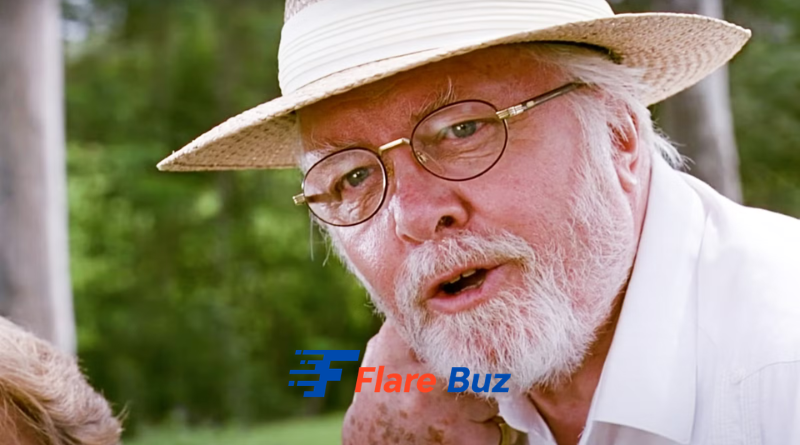
- Jurassic Park (1993): Played John Hammond, the visionary park creator
His role in Jurassic Park, directed by Steven Spielberg, introduced him to a new generation of audiences and remains one of his most beloved performances.
Transition to Filmmaking
While Richard Attenborough achieved considerable success as an actor, his ambitions extended beyond performing. He transitioned into directing and producing, where he found even greater acclaim.
Directorial Vision
Attenborough’s films often focused on historical figures and significant social issues. His storytelling was marked by meticulous research, emotional resonance, and a commitment to authenticity.
The Masterpiece: Gandhi
One of Attenborough’s most significant achievements was directing the 1982 film Gandhi, based on the life of Mahatma Gandhi.
Impact and Recognition
- Won 8 Academy Awards, including Best Director
- Celebrated for its historical accuracy and emotional depth
- Played a major role in introducing Gandhi’s philosophy to global audiences
The film starred Ben Kingsley in a career-defining performance. Attenborough spent nearly two decades developing the project, demonstrating his dedication and passion.
Other Notable Directorial Works
Richard Attenborough directed several other acclaimed films:
- A Bridge Too Far (1977): A war epic featuring an ensemble cast
- Cry Freedom (1987): Focused on apartheid and the life of Steve Biko
- Chaplin (1992): A biographical film about Charlie Chaplin
Each of these films demonstrated Attenborough’s ability to handle complex narratives and historical themes with sensitivity and depth.
Relationship with David Attenborough
Richard Attenborough’s younger brother, David Attenborough, is one of the most respected natural historians in the world.
David Attenborough
David’s work in nature documentaries, including series like Planet Earth, has transformed public understanding of wildlife and environmental conservation.
While Richard focused on cinema and storytelling, David dedicated his life to science and broadcasting. Together, they represent one of the most influential families in British cultural history.
Personal Life and Character
Richard Attenborough was known for his warmth, humility, and generosity. He married Sheila Sim, an actress, and the couple had three children.
Despite his fame, he remained grounded and committed to humanitarian causes. He supported numerous charities and was actively involved in promoting education and the arts.
Honors and Recognition
Richard Attenborough received numerous awards and honors throughout his life:
- Academy Awards (Oscars)
- BAFTA Awards
- Knighthood in 1976
- Life Peerage as Baron Attenborough
These accolades reflect not only his artistic achievements but also his contributions to society.
Cultural and Historical Influence
Attenborough’s work has had a lasting impact on both cinema and public consciousness.
Contributions to Film
- Elevated historical storytelling
- Brought global issues to mainstream audiences
- Inspired future filmmakers
Contributions to Society
- Promoted awareness of social justice
- Highlighted important historical figures
- Encouraged empathy and understanding
The Importance of Accurate Attribution
The confusion surrounding “Robert Attenborough” highlights the importance of accurate attribution in historical and cultural discussions. Misnaming can lead to:
- Loss of recognition for real achievements
- Spread of misinformation
- Confusion among audiences
By correctly identifying Richard Attenborough, we preserve the integrity of his legacy and ensure that his contributions are properly acknowledged.
Legacy and Enduring Influence
Richard Attenborough passed away on August 24, 2014, but his legacy continues to thrive.
In Film
His movies remain widely studied and appreciated for their craftsmanship and storytelling.
In Education
His works are used in academic settings to teach history, film studies, and ethics.
In Global Culture
His portrayal of historical figures has shaped how generations understand key moments in history.
Lessons from Richard Attenborough’s Life
Several key lessons can be drawn from his journey:
- Persistence Pays Off
His decades-long effort to create Gandhi demonstrates the power of perseverance. - Storytelling Matters
Films can educate, inspire, and transform societies. - Integrity is Essential
His commitment to authenticity set a standard in filmmaking. - Collaboration is Key
He worked with some of the greatest talents in the industry. - Humanity Comes First
His personal values were reflected in his professional choices.
Frequently Asked Questions (FAQs)
1. Is Robert Attenborough a real historical figure?
No widely recognized public figure exists by the name Robert Attenborough. It is often a mistaken reference to Richard Attenborough.
2. What is Richard Attenborough most famous for?
He is best known for directing Gandhi and acting in films like Jurassic Park and The Great Escape.
3. How is Richard Attenborough related to David Attenborough?
Richard Attenborough was the older brother of David Attenborough, the renowned natural historian and broadcaster.
4. What awards did Richard Attenborough win?
He won multiple Academy Awards, BAFTAs, and received a knighthood for his contributions to film and society.
5. Why is there confusion about the name Robert Attenborough?
The confusion likely arises from typographical errors or misremembering the name Richard Attenborough, a far more prominent and documented figure.
Conclusion
While the name “Robert Attenborough” may appear in searches and discussions, it is ultimately a misidentification that leads back to the remarkable life and career of Richard Attenborough. As an actor, director, and humanitarian, he left an indelible mark on the world.
His contributions to cinema, his dedication to historical storytelling, and his commitment to social values ensure that his legacy will endure for generations. Understanding his life not only clarifies the confusion but also provides inspiration for those who seek to make a meaningful impact through art and storytelling.